Roommate? Swipe. Match. Move in.
inki’s roommate finder instead of the chaos of Facebook groups: rooms and roommates in a swipe deck, with a match %, and chat only once you’ve both said yes. After the web version came the mobile app for iOS and Android — from the first line of code to App Store submission in a single day.
iOS: in Apple review · Android: coming soon
1 day
from the first line to App Store submission
2
platforms from one codebase: iOS and Android
1 account
the same sign-in on the web and in the app
0
disguised fake profiles — sample content is clearly labelled
How it started
Anyone who has looked for a roommate knows the Facebook groups: endless posts, “still looking for a third”, and eventually someone asking for a deposit before you’ve even seen the room. That’s where the idea came from: a young, enjoyable place built for students and young professionals, not estate agencies.
We built for two sides. One is looking for a room or wants to join others; the other has a room and is looking for a roommate. Both do the same thing: swipe, and when the interest is mutual, start talking.
The Roommates menu went live on the web two days earlier. Then came the question that, for this age group, isn’t really a question: where is it on my phone? So we built the app too — with the roommate features only, nothing else from inki.
From first launch to moving in
Five screens, one simple path.
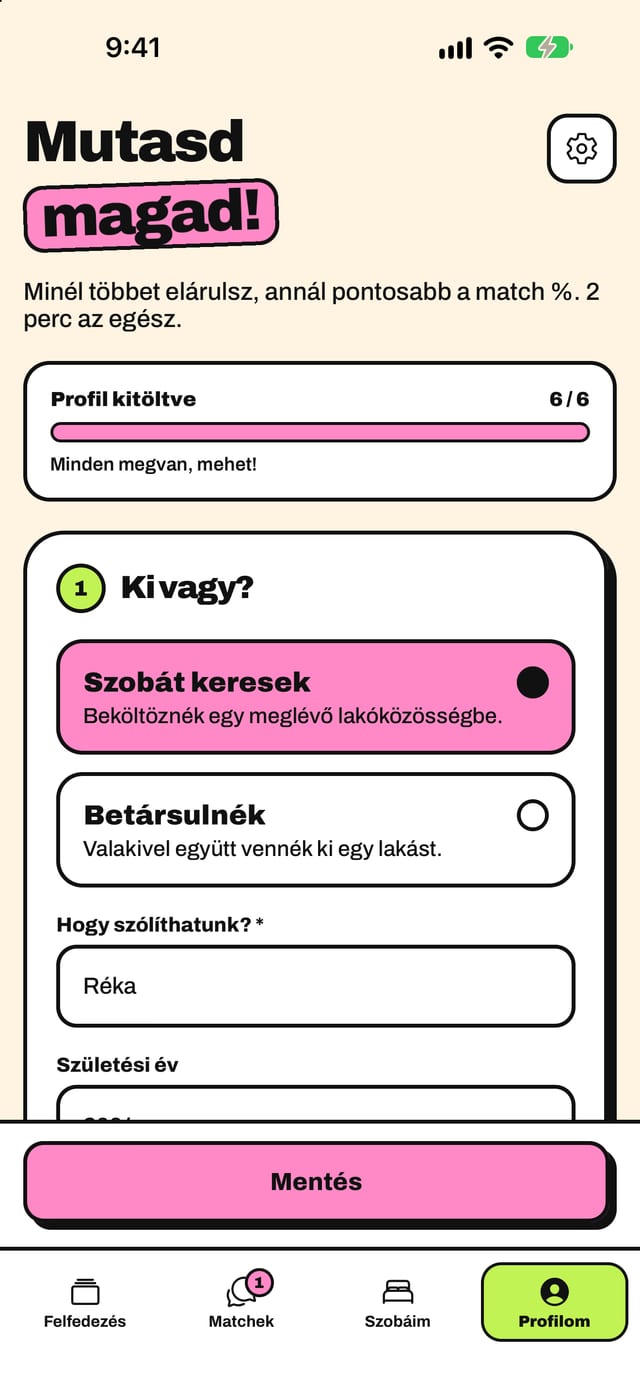
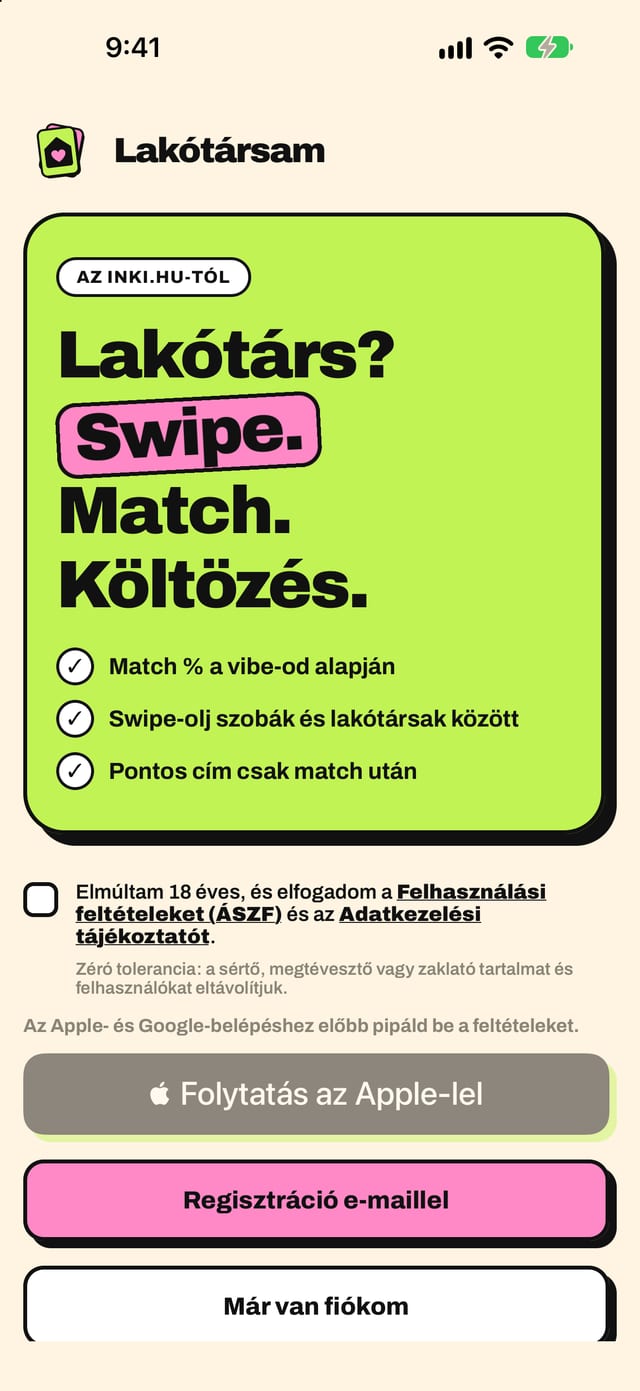
A profile in two minutes
Looking for a room or want to join others? Budget, preferred areas, move-in date, vibe tags and photos. The more you share, the more accurate the match %.
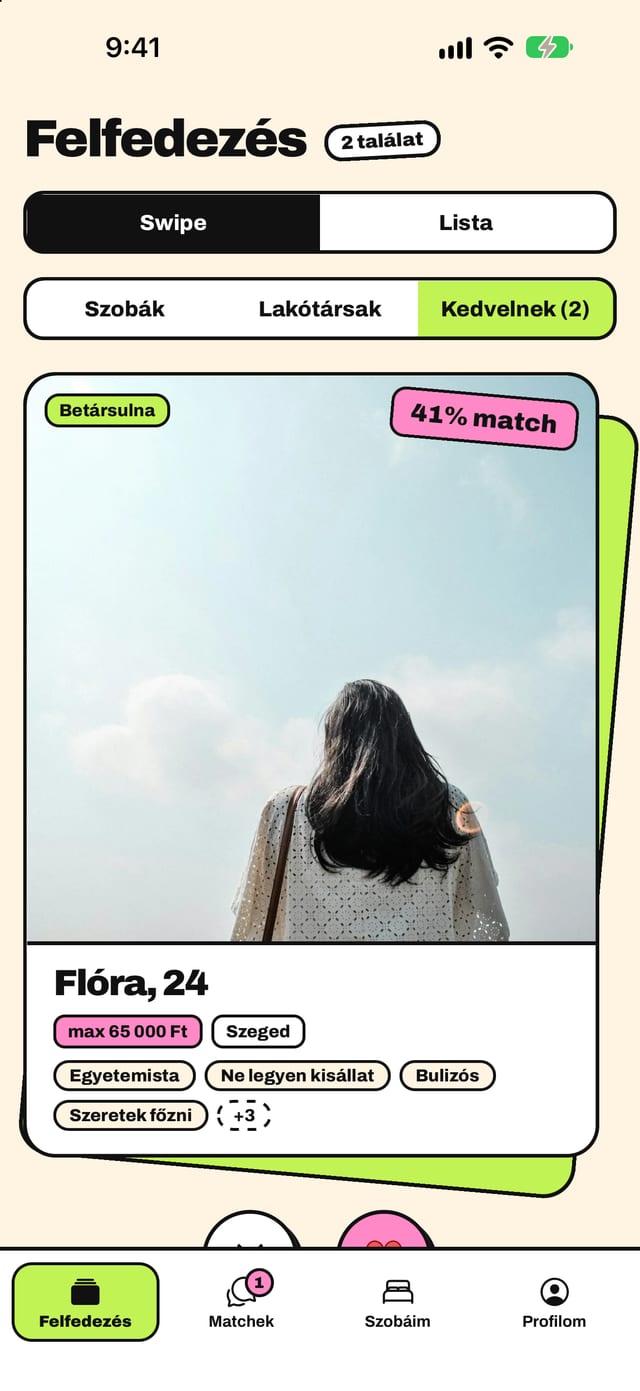
Swipe
Right if you like it, left if you don’t — for rooms and roommates alike. People who already liked you wait in their own deck.

Why you match
The match % isn’t a black box: you see it broken down by budget, location, move-in time and vibe.
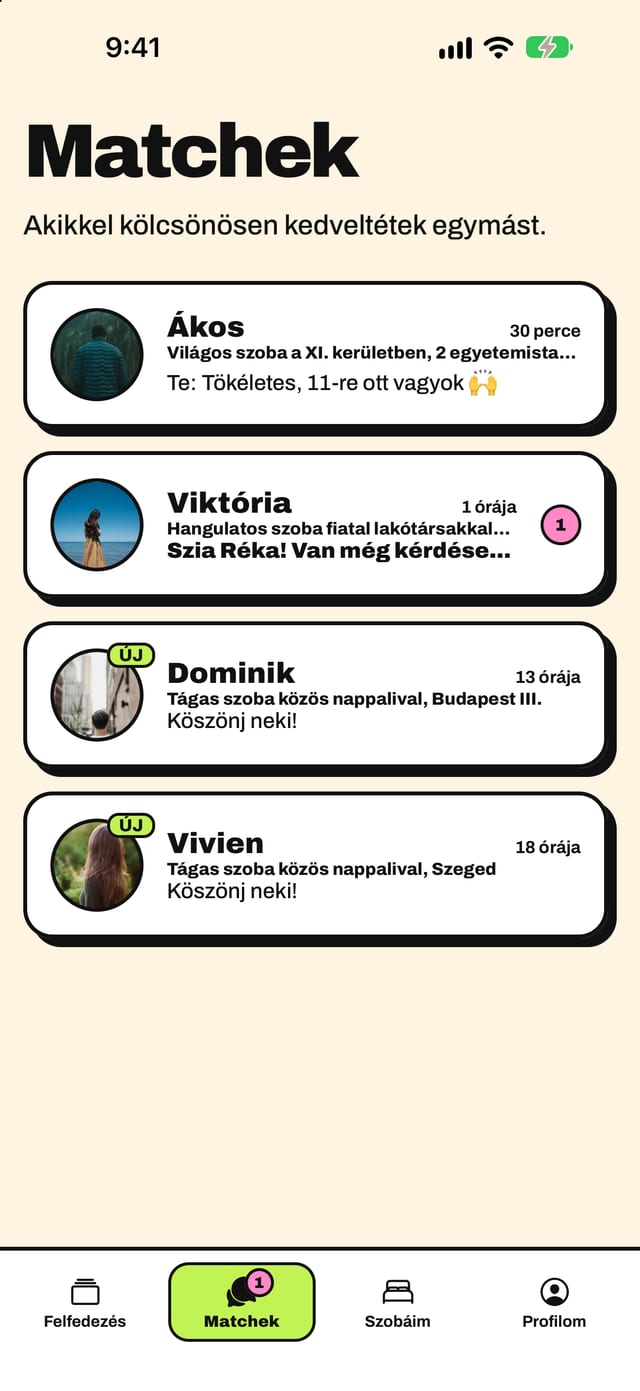
It’s a match!
When you’ve both said yes, a full-screen celebration and a push notification follow. All matches gather in one place.
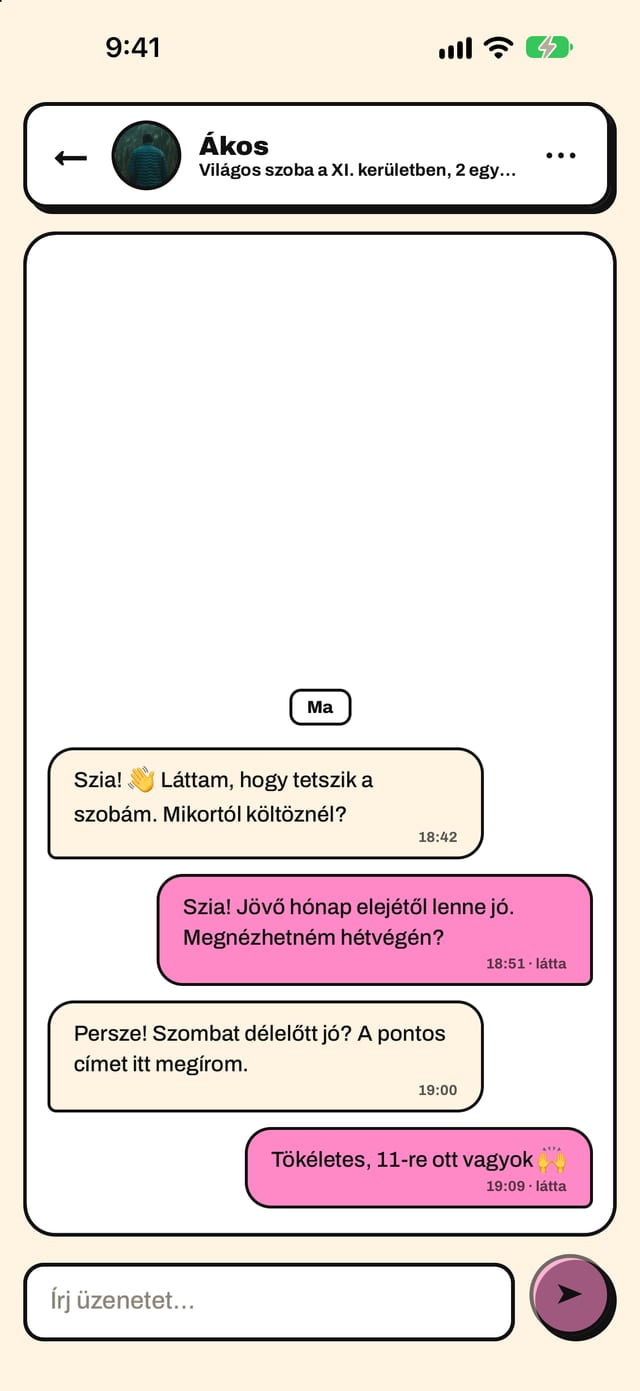
Chat, only after a match
Messaging opens only after a mutual like. The exact address is never shown anywhere — people share it with each other here.
Safety, because this isn’t a game
A roommate app brings strangers together, and sometimes money comes up. So safety wasn’t an afterthought — it’s the foundation.
Chat only after a mutual match
Nobody can message you out of the blue. Messaging opens once you’ve both liked each other.
The exact address is never public
Room listings only show the district; people share the address with each other in chat.
Report and block
Profiles, listings and conversations can be reported by category (fake profile, scammer asking for money, harassment), and anyone can be blocked — both ways.
Server-side content filter
Profile, listing and message text with offensive terms is rejected by the server, in Hungarian and English.
Moderation that respects privacy
Stats, profiles, rooms, reports and bans in the inki admin. Moderators can only look into conversations that were reported, nothing else.
Honest sample content
A swipe app with an empty deck is dead. Instead of fake profiles, it launched with 50 profiles and 15 rooms clearly labelled “Sample”: they never match, and they disappear on their own once there’s enough real content.
Under the hood
One codebase for iOS and Android, a backend shared with the web, and a few obstacles we had to clear along the way.
Native feel, one codebase
Expo and React Native, with the swipe deck built on Reanimated and Gesture Handler: the card moves under your finger instead of playing back an animation.
One account with the web
The same Laravel API and database serve both inki.hu and the app. Sign in with email or an Apple ID.
Push that doesn’t forget
Matches and new messages trigger notifications on both iOS and Android; device tokens that are no longer alive are cleaned up automatically.
Simple chat, on purpose
Instead of a websocket server, the app fetches new messages every few seconds while it’s open, and push takes over in the background. Fewer moving parts, the same experience.
The iOS 27 surprise
A mandatory lifecycle change in the new iOS made the app crash on launch. We found and fixed it before submission.
App Store submission from a script
The build, listing copy, screenshots and review submission all went through the App Store Connect API from a script — no clicking around, fully repeatable.
Mobile
- Expo SDK 57
- React Native 0.86
- expo-router
- TypeScript
Interaction
- Reanimated 4
- Gesture Handler
- TanStack Query
- expo-image
Backend
- Laravel 12
- Sanctum
- Sign in with Apple
Notifications
- Expo Push
- APNs
- FCM
What stuck with us
Getting from the first line to the App Store in a day isn’t magic: the web version already worked, so nothing had to be figured out twice. The app does the same thing — it’s just where its users already are: in their pocket.
Got an idea that still lives in a Facebook group?
A community, a marketplace, bookings or anything that belongs on a phone — tell us about it and we’ll show you how it could become an app. The first conversation is free.